

Showing posts with label C.S. Lewis. Show all posts
Showing posts with label C.S. Lewis. Show all posts
Thursday, December 11, 2025


Tuesday, December 10, 2024
Recommended Reading: C.S. Lewis and the Sex/Gender Distinction

A Paper Presented at the 2024 Undiscovered C.S. Lewis Conference
Beyond Perelandra, in 1948 when Lewis first published Priestesses in the Church?17 which ends with Lewis contrasting the roles of men and women within the church to their roles in society, he concluded “With the Church, we are farther in18: for there we are dealing with male and female not merely as facts of nature but as the live and awful shadows of realities utterly beyond our control and largely beyond our direct knowledge. Or rather, we are not dealing with them but (as we shall soon learn if we meddle) they are dealing with us. [emphasis mine]”19. And of course this was written only three years after Lewis had published That Hideous Strength which, if anything, supports and expands this concept of gender as more fundamental, more real, than sex—the thing towards which sex points.As Mary Steward Van Leeuwen puts it:
“The younger Lewis, … argued on behalf of including gender forms, or archetypes, to which women and men were called to conform themselves. ‘Suppose,’ Jane Studdock in That Hideous Strength wondered, just after her conversion, “Suppose one were a thing after all … designed by Someone Else and valued for qualities quite different from what one had regarded as one’s true self?”20.
Neither does Lewis’s approach to sex and gender here seem to have been even a notable departure from the thought of his peers. In The Silmarillion Tolkien comments that
[T]he Valar may walk, if they will, unclad, and then even the Eldar cannot clearly perceive them, though they be present. But when they desire to clothe themselves the Valar take upon them forms some as of male and some as of female; for that difference of temper they had even from their beginning, and it is but bodied forth in the choice of each, not made by the choice, even as with us male and female may be shown by the raiment but is not made thereby."
Here again, we see the idea of gender as a quality of spirit/soul which determines the Valar’s sex when they elect to take a body. Meanwhile Charles Williams’s whole concept of approaching God through the ways of negation and affirmation of images (corresponding roughly to apophatic and cataphatic theology)21 certainly points in a similar direction, being grounded in the idea that we can (imperfectly) use the physical world to gain some degree of understanding about the spiritual, by which it is caused. And of course Barfield’s “Great War” with Lewis over the role of imagination as a mode of divining Truth22 situates Barfield as inclined to place more weight than Lewis on the legitimacy of gender as the unifying meaning of physical/biological sex. As he (arguing for the capacity of poetry to unveil Truth) argues in Poetic Diction
“Mythology is the ghost of concrete meaning. Connections between discrete phenomena, connections which are now apprehended as metaphor, were once only perceived as immediate realities. As such the poet strives, by his own efforts, to see them, and to make others see them, again.”23
Finally, beginning at least as early as 1944 we have manifold evidence that Lewis held to what has been described (and not infrequently criticized) as an overly platonic or sometimes (mis)characterized as a “Cartesian dualist”24 view of reality, and that this platonist influence which understands the physical to be an outflowing of the spiritual, formed a critical part of his overall theology and metaphysics25 writing in the original version of the essay Transposition that:
“Our problem was that in what claims to be our spiritual life all the elements of our natural life recur: and, what is worse, it looks at first glance as if no other elements were present. We now see that if the spiritual is richer than the natural (as no one who believes in its existence would deny) then this is exactly what we should expect.”26
Read the full article: https://billieiswriting.substack.com/p/cs-lewis-and-the-sexgender-distinction
Tuesday, April 23, 2024
Recommended Reading: Not a Tame Lion
On the Conservative Evangelical Misuse of Aslan
by Billie Hoard
"Aslan is not a tame lion. Translating from Lewis’ fiction to a more conventional theology, Jesus is not predictable—He can’t be controlled or kept within our expectations of him. In her sermon this week my wife, Ashley, quoted 'not a tame lion' and concluded her sermon saying 'We do not serve a tame God. This life is full of twists and turns, but he is good. Trusting Jesus can be scary, but it’s worth it.'
"These two descriptions of Aslan: that he isn’t tame; isn’t safe, but that he is Good are likely the two most quoted descriptions of him in contemporary culture. They are also touchstones throughout the series. Characters are forever reminding one another or explaining their inability to produce Aslan at a whim that He isn’t a tame lion.

"But 'not a tame lion' has also been misused. I had an alarming conversation with someone on Twitter lately and it was distressingly representative of conversations that seem to be happening more and more often. This person used the phrase 'not a tame lion' to argue that God is not bound to act (or to expect us to act) in ways that are commensurate with 'Love' as any normal or reasonable person might define it but that since Jesus is 'not a tame lion', Jesus definition of love might entail cruelty, hatred, the slaughter of innocents, wars, and mass death. Another Lewis quote, this time from the essay The Poison of Subjectivism sprung to mind: 'If once we admit that what God means by ‘goodness’ is sheerly different from what we judge to be good, there is no difference left between pure religion and devil worship.'..."
"Within a few days, Shift's false Aslan gives way to a being he call’s 'Tashlan' an amalgamation of Aslan and the Calormen god Tash. Un-tamed-ness taken and warped without the guiding restriction of goodness leads, in the end to worship of something twisted and utterly contrary to God—there is no difference left between pure religion and devil worship.
"Increasingly I am finding that, here in the US the white Christian Nationalist church are little more than adherents of Tashlan."
Read the full, original article: https://billieiswriting.substack.com/p/not-a-tame-lion
Tuesday, February 2, 2021
Looks like nephew Wormwood might have been listening after all... and moved to the "new world"...

“Whichever he adopts, your main task will be the same. Let him begin by treating the Patriotism or the Pacifism as a part of his religion. Then let him, under the influence of partisan spirit, come to regard it as the most important part. Then quietly and gradually nurse him on to the stage at which the religion becomes merely part of the ‘Cause,’ in which Christianity is valued chiefly because of the excellent arguments it can produce in favour of the British war effort or of pacifism.”
-- Good Old Uncle Screwtape (by C. S. Lewis)
Monday, November 26, 2012
The Animal Self and the Diabolical Self
 Reading this quote this morning makes me think it's time to re-read MERE CHRISTIANITY again...
"The sins of the flesh are bad, but they are the least bad of all sins. All the worst pleasures are purely spiritual: the pleasure of putting other people in the wrong, of bossing and patronising and spoiling sport, and back-biting; the pleasures of power, of hatred. For there are two things inside me, competing with the human self which I must try to become. They are the Animal self, and the Diabolical self. The Diabolical self is the worse of the two. That is why a cold, self-righteous prig who goes regularly to church may be far nearer to hell than a prostitute. But, of course, it is better to be neither."
I don't think Lewis is espousing "small" sin at all here, but instead he is talking about two different inclinations toward "sinning," similar to what Jesus mentioned in the Sermon on the Mount when he stated that what goes into a man doesn't make him unclean, but that which comes out of him does, and the idea that to call your brother "fool" is on equal footing with the act of murder itself. One is a natural inclination of the natural body we must resist, and the other is a deliberate choice after weighing the differences and still choosing to do evil. One is an act of the spiritual will, one than can hide behind a self-righteous act by avoiding the animal sins of drinking, sleeping around, etc. but living nonetheless in the spiritual ones that are easily dressed up and hidden (the pursuit of power, greed, etc.). A prostitute (to use Lewis' word) may be honestly in a bad situation and want out or may be in the only situation he or she has ever known (even acknowledging the wrongness of the lifestyle), but a deacon who hides behind church power to feed his greed and abuse of others (for example by "disallowing" mixed race couples to feel comfortable in church or to make sure that what he wants to happen for the direction of the church body because he gives the most money in tithes and offerings) has willfully embraced the diabolical self and is spiritually choosing the sins of the spirit. Does that make sense?
 In another way of saying it, the sins of the animal self are sins of impulse while the sins of the diabolical self are sins of methodical, willful evil choices.
Sins of impulse are equally "bad" but can be more easily overcome in time while sins of willfully embracing evil traits and character require more work and faith to overcome. And sadly, the church today tends to focus on the sins of the natural self, best known in the adage of "no make-up, no dancing, no sex" rather than the admonition to live like Christ and have the mind of Christ in all you do, especially that which goes on beneath the surface, that which people may never see.
And sometimes because it doesn't reflect poorly on our churches or because we're blind to it, our churches today often empower and back those who regularly indulge in the sins of the diabolical self. It's far easier to spot a drug user with a filthy mouth than a well-dressed and "proper" church goer who runs his company and/or family like a selfish, greedy, power-hungry tyrant.
Sunday, October 21, 2012
You Can't Go Home Again?
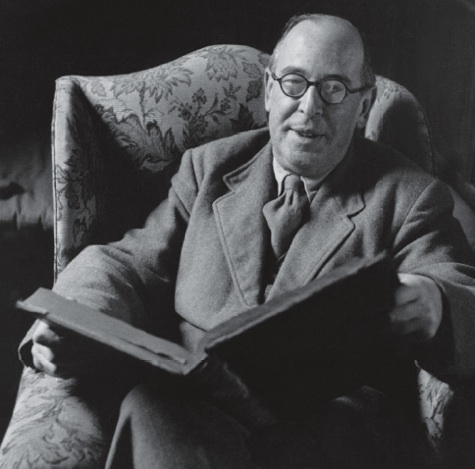 When was it that you realized your early inspirations no longer held sway over you, when that childhood book just didn't hit you the same way anymore? What changed?
For
me, this moment occurred when I looked back over some of my early
stories and found that they were the work of different writer than the
one I had become in the years between writing them and re-discovering
them. My early work tended to be inspired more by the allegories of C.S.
Lewis, and I was was working in a Christian bookstore at the time
trying to get a job as an editor for a Southern Baptist Convention, I
wrote what I knew. And what I knew was the stories within the Christian
subculture of Frank Peretti and Randy Alcorn, so that's what I wrote,
only with a sci-fi slant.
However, a few years later
(even while working for the SBC) I found I had become a different kind
of writer. I no longer felt compelled to write to the choir (so to
speak) or to write for any evangelistic or allegorical motive. I simply
wanted to tell stories.
Because I am who I am and was who I was,
certain values will and would come through those tales, but gone were the days of
writing with an foreordained agenda.
I still love to
read C.S. Lewis -- don't get me wrong -- but I'm not looking to write
that kind of story anymore, nor do I believe that's my calling.
Subscribe to:
Posts (Atom)