Saturday, January 27, 2024

50 Christian Albums for Even Deconstructing / Reconstructing / Recovering Fans of CCM

If you're looking for a lot of radio-friendly or praise and worship sing-alongs on this list, then you may want to look elsewhere. A lot of these albums were either too honest for Christian radio, too edgy for Adult-Contemporary, or just too weird for people to actually believe they were talking about faith in the first place. A rare few managed to slip through the cracks (like Nordeman or Out of the Gray) but their truly great stuff never saw airplay. 

As such, it's likely that several (maybe most) of these will be unfamiliar to the fan of Christian radio who grew up on "safe for the whole family" staples like Steven Curtis Chapman, First Call, and Michael W. Smith or later P&W stalwarts like Chris Tomlin, Matt Redman, and David Crowder. 

Note: My rules for this list. 

A. Only one album per band. In the case of alternates, I have included them in the listing as close seconds.

B. The album must be one that doesn't limit itself to "speaking platitudes to the church" or "preaching to the choir." It must show some understanding of being salt and light by being in the world as an equal, not standing apart from it to condemn it, shouting at it across the chasm to "get saved," or putting people off with churchy jargon.

C. The album must show an artistic sense of understanding the human condition and what faith means to those who must live in the incarnation every day, fully human with all that means and fully a member of another world in  Christ.

So, here in no particular order is my absolutely opinionated list of 50 key albums that are still important and still viable for those believers who are in the process of re-evaluating their beliefs or even deconstructing them. 

These are albums that still have a lot to say, even to those on the back side of a faith journey. 

1. Poor Old Lu -- Sin

2. Walk on Water -- Walk on Water

3. Chagall Guevara -- Chagall Guevara

4. Leslie Phillips -- The Turning

5. The Choir -- Chase the Kangaroo

6. The Violet Burning -- Strength

7. Daniel Amos -- Darn Floor-Big Bite

(though either Fearful Symmetry or Horrendous Disk could be in this spot)

8. Mortal -- Pura

(Fathom is also amazing and depending on the day and time often replaces Pura in this list.)

9. Steve Taylor -- I Predict 1990

(though either Liver or Squint could be in this spot as well)

10. 77s -- The 77s

(Drowning with the Land in Sight could be here as well)

11. The Waiting -- Blue Belly Sky

12. Jacob's Trouble -- Jacob's Trouble

13. Whiteheart -- Freedom

14. Jars of Clay -- Jars of Clay

15. Adam Again -- Homeboys

(as good as Dig is, this one edges it out for me)

16. Kosmos Express -- Simulcast

17. Aleixa -- Honey Lake

18. Say-So -- Say-So

19. Black-Eyed Sceva -- 5 Years, 50,000 Miles

20. Ideola -- Tribal Opera

21. Tonio K -- Romeo Unchained 

(though Notes from the Lost Civilization is really, really good, nothing beats Romeo Unchained)

22. Plankeye -- The Spark

(Commonwealth is close, but The Spark is so much more raw so it takes the spot.)

23. D.A.S. -- Devils Angels Saints

24. Phil Keaggy -- Sunday's Child

(it's Beatles-tastic!)

25. PFR -- Goldy's Last Day

(as great as their debut it, this one's their magnum opus)

26. The Swirling Eddies -- Outdoor Elvis

27. Out of the Gray -- Out of the Gray

(they never got better than this one, Tommy Sims on bass made this album, hands down)

28. Carolyn Arends -- Seize the Day and Other Stories

(this was the story of my faith in my early 20s)

29. Vince Ebo -- Love Is the Better Way

30. Nichole Nordeman -- Wide-Eyed

(the most honest questions I'd ever heard in CCM)

31. Brent Bourgeois -- Come Join the Living World

32. Mark Heard -- Satellite Sky

33. Jan Krist -- Decapitated Society

34. Phil and John -- Carnival of Clowns

35. Derek Webb -- Mockingbird

(the world needs more like Derek, a lot more)

36. Rich Mullins -- The World As Best As I Can Remember It 

(so many great Rich Mullins albums, so much honesty in his songs; still this one is the one that made me fall in love with his earnestness and humility)

37. Charlie Peacock -- Love Life

(some would argue that Lie Down in the Grass or The Secret of Time is his best, but I think he got better with time; as such, this one just edges out other releases like Everything That's On My Mind to take this spot)

38. Margaret Becker -- Soul 

39. Considering Lily -- Considering Lily

40. Fleming and John -- Delusions of Grandeur

41. Iona-- The Book of Kells

42. My Brother's Mother -- Deeper Than Skies

43. A Clash of Symbols -- Begging at the Gate Called Beautiful

44. Southside Blades of Eden -- Spirit, Love & Fire

45. Undercover -- Forum

46. Magdalen -- Revolution Mind

47. Shades of Blue -- Shades of Blue

48. Uthanda -- Groove

49. Mukala -- Fiction
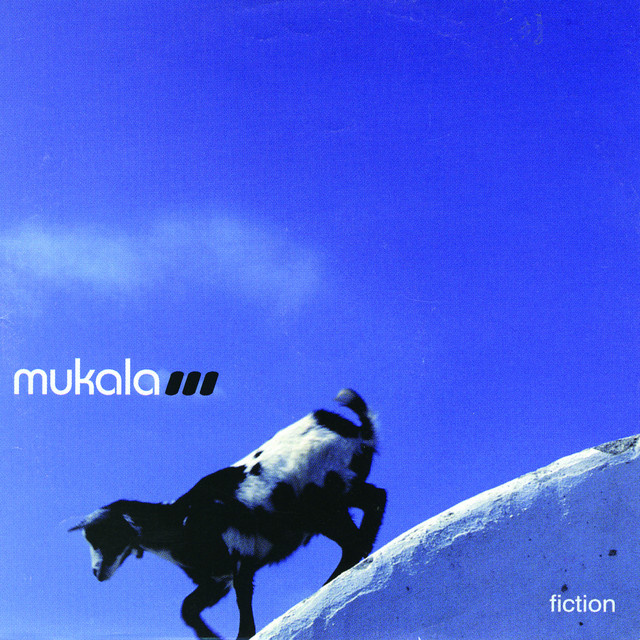
50. Dave Perkins -- The Innocence

Thursday, January 25, 2024

A State of Affairs...


As long as the left supports abortion rights, no matter how biblical their other goals may be, nothing they do will cause them to be supported by evangelicals. 

As long as the right opposes abortion, no matter how unbiblical their character and goals may be, nothing they can do will cause them not to be supported by evangelicals. 

Issues of individual character matter less to American Christianity (with a few outliers) than being able to stop others from doing the sins evangelicals feel are the "critical" ones for believers. In other words, the Fruit of the Spirit takes a back seat to judging the toothpick in another person's eye.

Friday, December 15, 2023

"Family Values"

What they mean when they say "family values" - straight, white, suburban, 1950s ideals where you hid the sins beneath the veneer of civic politeness and patriotism. No gays. No trans. No uppity blacks talking about unfairness in the system. Submissive women doting on husbands. 

What I mean when I say "family values" - actual values that the Bible and other holy books espouse: kindness, patience, service, love, goodness, gentleness, love for the poor, widows, and orphans, the rich refusing to hoard up treasures on earth where moth and rust destroy.


Wednesday, November 29, 2023

The Grand Mystery and the Adventure of the Search

"What you say about God—who God is, what God cares about, who God rewards, and who God punishes—says nothing about God and everything about you. If you believe in an unconditionally loving God, you probably value unconditional love. If you believe in a God who divides people into chosen and not chosen, believers and infidels, saved and damned, high cast or low caste, etc. you are likely someone who divides people into in–groups and out–groups with you and your group as the quintessential in-group. God may or may not exist, but your idea of God mirrors yourself and your values." -- Jim Palmer

I noticed this quote from Jim Palmer the other day (listed among a group of other "14 things the misguided religious establishment doesn’t want you to know") and got really excited by this particular point. 

I can only "speak" for myself, but I've found this to be incredibly true in my life, both from my relationships with other religious people I have known and in my own faith as well. 

It would be easy to address the faults in others by referencing this quote, but that's not my intention. Instead, I want to mention only my own piece of timber instead of the stick in anyone else's eye. 

Rather than approaching my faith as the "get out of hell free" card or the "cosmic lawgiver" or even the "celestial lover" that have become the predominate metaphors for our relationships with the I Am (i.e., Christ/God/the Holy Spirit), my own metaphor has always been that of the great mystery, the ultimately unknown and unknowable. Now, I know the whole point of the faith is that Christ is knowable, but for my understanding of my chosen religion, no matter how well I may feel I know or know about, it is but a mere pittance and the tiniest fraction of what I could or should know. 

For me, my journey of faith is about the journey, the search for growing deeper and deeper into the great mystery. It hasn't always been so. As a child and a teenager, I was very much indoctrinated in the fear of Hell, the "Sinners in the Hands of an Angry God" version of the gospel. Later, in my twenties, I discovered C.S. Lewis and Mere Christianity and the books of Francis Schaeffer and embraced the faith as an exercise of the rational. As such, I embraced the world of theology and apologetics. Some time after that, I read the wonderful Singer trilogy by Calvin Miller and began to seek out the version of the Christ who was the romantic leading man for his bride (the church's role in this metaphor). 

The next step is the one that has captured my mind and ensnared my imagination for the past 20 or so years. It came from learning that none of the previous understandings fully helped me to seek the heart of God, the almighty, the infinite, the beyond creation. Finding freedom from Hell gave me little more than the need to say magic words. Apologetics and theology gave me a deeper knowledge about God (or at least what the writers I read knew or felt they knew about God). And pursuing Christ the great lover left me feeling empty as if I had only been fooling myself all those years and I was supposed to be more secure and solid on my standing, as if I could physically see, touch, hear, and know someone so beyond my ability to comprehend. 

Only by embracing the object of my religion as the great mystery allows me to embrace the journey and not become a tangle of guilt as not feeling knowledgeable enough, loving enough, following the rules enough, etc., because I can acknowledge the truth (my truth, anyway) that it's okay not to know the rules because we made them up for the most part, not to feel the tender affection of the bridegroom because I don't possess yet the ability to feel such things until I can know as I am known, not to be able to place the mystery in a box called theology and apologetics and say "this I know and it will never change."

Only by embracing the journey toward the great mystery can I come to terms with a gradually growing (but never getting beyond the simplest of childish grasping). Only by embracing that the "out there" is something that can't fully be an "in here" -- after all, even in Christ, there was still God that couldn't fit and remained as the Godhead -- and therefore something that I can't trust my senses to know or not know, to feel or not feel. 

I think this is why my writing also takes the direction of the adventure of uncovering or discovering the mystery. Because of who I am, some might say who I was made to be, my stories helped me to understand this part of me and how it relates not only to my craft as a storyteller but also my understanding of my faith. 

As I embrace the adventure of seeking to comprehend the incomprehensible, I can fully understand (finally) how to extend grace to all others on that journey (or not on that journey). A journey means each person is on their own trip and my business is my trip, not yours. It allows me to give latitude to those who may believe differently than I do, because if God is ultimately a mystery, they have as much right to try to put the mystery into words as I do. It means that I don't judge those who follow different rules because the rules come from theology and theology comes from individual and group study, and that my rules apply to me alone based on my study. It means that until the journey is over all the answers aren't found, like U2 said, "I still haven't found what I'm looking for." 

Or, as Carolyn Arends sings in her song " Reaching":

There's a time I can recall
Four years old and three feet tal
Trying to touch the stars and the cookie jar
And both were out of reach...

Well, I should not have thought it strange
That growing causes growing pains
'Cause the more we learn the more we know
We don't know anything...

So when we taste of the divine
It leaves us hungry every time...

And perhaps I never will find what I'm looking for or reach the stars and the cookie jar. At least, not until maybe I become a flower leaning towards the light, to borrow from the metaphor Dante used in Paradiso. After all, it's as good (or perhaps even better) a metaphor as any of the others I've lived under up to now.

As I embrace the journey of seeking the heart of the mystery of God, I have only one guiding law. Adapt as I follow and grow. 

Tuesday, November 28, 2023

As you know, I once was an evangelical megachurch pastor...

Editor's Note: This is a post from Jim Palmer, a former pastor who is currently an evangelical. While we don't hold every point listed here in common, I do think he presents a lot of information worth mulling over. 

As you know, I once was an evangelical megachurch pastor and my pastoral career stretched over many years. Eventually, I could no longer teach Christian doctrine with a good conscience and realized this teaching was not truly changing people’s lives… and so I walked away from the whole enchilada. 

Below are 14 things that the misguided religious establishment doesn't want you to know. Speaking for myself and my personal experience, I was not able to see or admit these things to myself. I truly got into ministry initially because I wanted to make a difference and help people, and I relied upon the belief-system I learned as the proper framework to achieve this. It took a lot of post-religion reflection to see the ways this belief-system was hurting people. 

I offer the below list in hopes that you might disentangle yourself from harmful beliefs and attitudes impacting your life. 

14 things the misguided religious establishment doesn’t want you to know: 

1. Toxic religion is rooted in fear, especially fear about the afterlife. It leverages the false doctrine of hell to win converts and demand holiness. The fear of God's disapproval, rejection, abandonment and punishment is another hallmark of toxic religion. 

2. Clergy have no innate authority. Holding a church leadership position or having a theological degree does not imbue a person with special divine authority or superiority. The terms "anointed", "called", or "chosen" or titles such as "pastor", "priest", "bishop", "elder", "evangelist" or "apostle" do not confer any innate authority on an individual or group. 

3. We hold sacred what we are taught to hold sacred, which is why what is sacred to one community is not sacred to another. 

4. The stories in our sacred books aren’t history, nor were they meant to be. The authors of these books weren’t historians but writers of historical fiction: they used history (or pseudo history) as a context or pretext for their own ideas. Reading sacred texts as history may yield some nuggets of the past, but the real gold is in seeing these stories as myth and parable, and trying to unpack the possible meanings these parables and myths may hold. 

5. Prayer doesn’t work the way you think it does. You can’t bribe God, or change God’s mind through obedience, devotion, or groveling. The underlying theistic premises of prayer are untenable.

6. Anything you claim to know about God, even the notion that there is a God, is a projection of your psyche. What you say about God—who God is, what God cares about, who God rewards, and who God punishes—says nothing about God and everything about you. If you believe in an unconditionally loving God, you probably value unconditional love. If you believe in a God who divides people into chosen and not chosen, believers and infidels, saved and damned, high cast or low caste, etc. you are likely someone who divides people into in–groups and out–groups with you and your group as the quintessential in-group. God may or may not exist, but your idea of God mirrors yourself and your values. 

7. Nobody is born Jewish, Muslim, Hindu, Catholic, Protestant, etc. People are born human and are slowly conditioned by narratives of race, religion, gender, nationality, etc. to be less than human. 

8. Theology isn’t the free search for truth, but rather a defense of an already held position. Theology is really apologetics, explaining why a belief is true rather than seeking out the truth in and of itself. All theological reasoning is circular, inevitably “proving” the truth of its own presupposition. 

9. Becoming more religious cannot save us. Religion is a human invention reflecting the best and worst of humanity; becoming more religious will simply allow us to perpetuate compassion and cruelty in the name of religion. Because religion always carries the danger of fanaticism, becoming more religious may only heighten the risk of us becoming more fanatical. 

10. Becoming less religious cannot save us. In fact, being against religion can become it’s own fanaticism. Becoming less religious will simply force us to perpetuate compassion and cruelty in the name of something else. Secular societies that actively suppress religion have proven no more just or compassionate than religious societies that suppress secularism or free thought. This is because neither religion nor the lack of religion solely nullifies our human potential to act out of ego, greed, fear, hostility, and hatred. 

11. A healthy religion is one that helps us own and integrate the shadow side of human nature for the good of person and planet, something few clergy are trained to do. Clergy are trained to promote the religion they represent. They are apologists not liberators. If you want to be more just, compassionate, and loving, you must do the personal work within yourself, and free yourself from the conditions that lock you into injustice, cruelty, and hate, and this means you have to free yourself from all your narratives, including those you call “religious.” 

12. Religious leaders claims that their particular understanding and interpretation of their sacred books should be universally accepted. Religious leaders often say, “My authority is the Bible.” It would be more accurate for them to say, “My authority is what they taught me at seminary the Bible means.” People start with flawed or false presuppositions about what the Bible is, such as: the Bible was meant to present a coherent theology about God or is a piece of doctrinal exposition; the Bible is the inerrant, infallible and sole message/"Word" of God to the world; the Bible is a blueprint for daily living. Too often religious leaders make God about having "correct theology." There are a lot of unhappy, broken, hurting, suffering, depressed, lonely people in church with church-approved theology. 

13. If your livelihood depends on the success of your church as an organization, it doesn't take a rocket scientist to see that you will mostly define and reward Christianity as participation in church structures and programs. Christian living is mostly a decentralized reality or way of life, not a centralized or program-dependent phenomenon. Church attendance, tithing, membership, service, and devoted participation, become the hallmarks of Christian maturity. 

14. You are capable of guiding your own spiritual path from the inside out and don't need to be told what to do. You naturally have the ability, capacity, tools and skills to guide and direct your life meaningfully, ethically and effectively. Through the use of your fundamental human faculties such as critical thinking, empathy, reason, conscience and intuition, you can capably lead your life. You have the choice to cultivate a spirituality that doesn’t require you to be inadequate, powerless, weak, and lacking, but one that empowers you toward strength, vitality, wholeness, and the fulfillment of your highest potentialities and possibilities.

-- Jim Palmer (reposted from Facebook)

Friday, October 13, 2023

Nuwanda Forever

That moment when the conservative fundamental beliefs you grew up with tell you that you should shut up and back down and get in line...